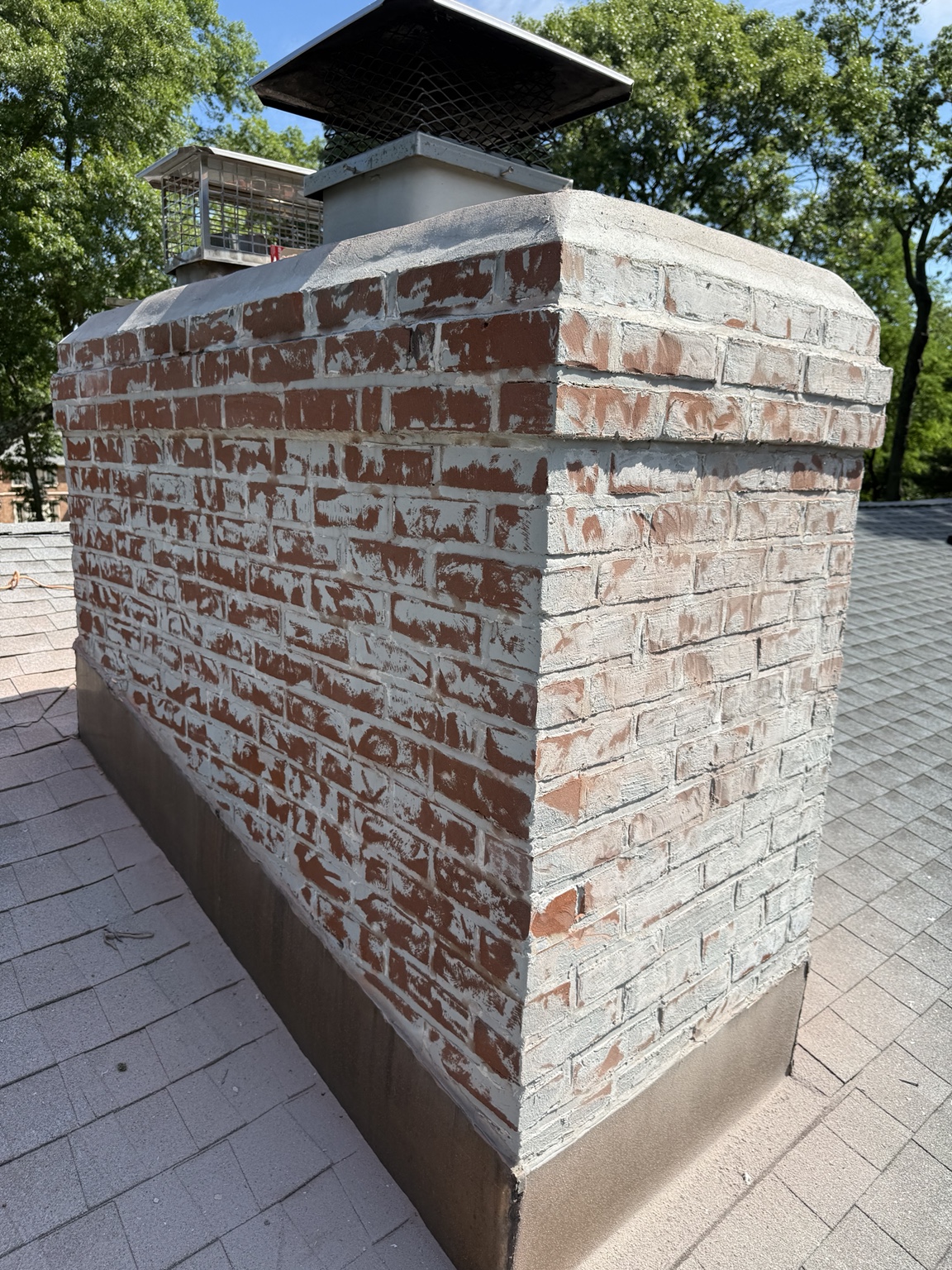
A stain beside a chimney does not automatically mean the entire roof needs replacing. In Glen Cove, a leak at the roof-to-chimney connection can come from metal flashing, cracked masonry, deteriorated mortar, or a problem higher up the roof. Finding the water path before choosing a repair can save homeowners from paying for work that does not address the cause.
Why the roof-to-chimney joint is vulnerable
The chimney interrupts the shingle roof, creating a joint between materials that respond differently to temperature and moisture. Wind-driven rain can find an opening behind loose metal or through deteriorated mortar. Water may travel along framing before it appears as a ceiling stain, so the wet spot indoors is not always directly below the defect.
Glen Cove sits on Nassau County’s North Shore, where roofs are exposed to seasonal rain, wind, and freeze-thaw conditions. Those conditions make careful water-shedding details especially important, but they do not tell you which part of a particular chimney has failed.
Know the difference: step flashing and counterflashing
Step flashing is installed in overlapping pieces alongside courses of shingles where the roof meets the chimney. At the downhill face, an apron helps move water onto the roof surface. The uphill connection needs its own properly integrated flashing detail.
Counterflashing covers the upper edge of the base or step flashing and connects to the chimney masonry. The pieces should overlap in a way that sheds water outward while accommodating movement. A bead of caulk smeared across the visible joint is not a substitute for correctly integrated flashing.
When does copper make sense?
Copper is a durable, workable flashing material that can be formed around chimney corners and detailed for a neat finish. It is not automatically the right answer for every roof. The installer should consider the existing roof material, adjoining metals, fasteners, chimney condition, and the complete flashing assembly rather than choosing a material by appearance alone.
Our actual Glen Cove project shows copper flashing at the base of a painted brick chimney, adjacent asphalt shingles, preparation work, and the completed masonry coating. The gallery is a record of that job—not proof that every chimney needs the same treatment. See the project photos: https://www.solidhomeny.com/chimney-flashing-waterproofing-glen-cove-ny.html
Five clues worth documenting before an inspection
First, note whether staining appears after wind-driven rain or after several hours of steady rain. Second, photograph any visible gaps, lifted metal, or loose sealant from a safe ground-level vantage point. Third, look for crumbling mortar, spalled brick faces, or cracks in the crown. Fourth, check for damp attic sheathing near the chimney if the attic is safely accessible. Fifth, note any prior roof or chimney repairs and the approximate age of the shingles.
Do not climb onto a wet or steep roof to investigate. A roofer can assess concealed transitions and may need to lift surrounding shingles to determine the condition of the existing flashing. If a chimney serves a fireplace or heating appliance and you suspect a venting issue, have the appliance and flue evaluated by a qualified chimney professional.
Repair flashing, masonry, or both?
A targeted flashing repair may be appropriate when surrounding shingles and the chimney are sound and the water-entry path is localized. If mortar joints are deteriorated, repointing or other masonry repairs may also be necessary. A cracked crown, cap issue, or damaged shingles above the chimney requires a different scope. Replacing visible metal without checking these areas can leave the original leak unresolved.
Ask the contractor to explain what will be removed, what will be reused, how the new metal ties into the shingles, how counterflashing is secured, and whether damaged mortar or roof decking is included. For a larger chimney, ask how water is directed around its uphill side.
What a useful chimney flashing estimate should say
A clear written proposal should identify the inspected areas, the suspected source of leakage, the metal and roofing materials, the planned removal and replacement, masonry work if needed, debris handling, and what happens if hidden damage is uncovered. Ask for photographs of the existing conditions and finished details. Be cautious of a quote that promises a permanent fix based only on a photograph of an interior stain.
Frequently asked questions
Can a chimney leak even when the shingles look fine? Yes. Flashing, mortar, or chimney-top components can allow water entry while nearby shingles remain serviceable.
Will new caulk stop a chimney leak? Sealant can be one component of a properly designed joint, but it cannot replace missing or incorrectly lapped flashing.
Should the whole chimney be waterproofed? Not necessarily. Masonry coatings, repointing, crown work, and flashing repairs address different conditions. Diagnose the source first.
Request a chimney flashing inspection in Glen Cove
Solid Home Improvement works on chimney flashing, roofing, and masonry across Nassau and Suffolk counties. If you have staining or a suspected chimney leak in Glen Cove, call 631-740-2148 or request an estimate at https://www.solidhomeny.com/get-a-quote.html. Describe when the leak appears and share any photos you have taken safely.